Santa Clarita feels different from the Los Angeles basin the moment you come over the pass. Summers are hot and dry, winter nights can dip near freezing, and gusty winds sweep through the canyons in fall. Add master-planned neighborhoods climbing the hillsides of Valencia, Saugus, Newhall and Canyon Country, and you have a city where the right sunroom or patio room has to handle every season. California Sunroom Price serves Santa Clarita and the surrounding areas, including Castaic, Stevenson Ranch, Agua Dulce and Palmdale.
This guide explains how Santa Clarita’s climate and neighborhoods shape what you should buy, what drives the cost, and how to get an exact price.
What makes Santa Clarita a four-season market for sunrooms?
Summer heat
Summer afternoons in the valley regularly run much hotter than the coast, and the sun is intense on south and west exposures. A room without the right roof and glass can become too warm to use in the middle of the day.
Winter cold
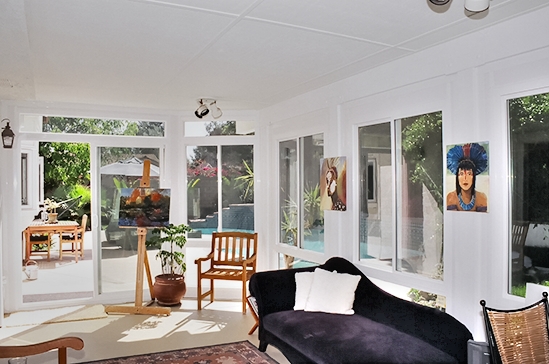
Clear winter nights cool off quickly, and frost is not unusual in low spots. A room that holds daytime warmth becomes a bright, cozy retreat on cold, sunny winter afternoons.
Wind
Santa Ana wind events push dust, leaves and debris through the canyons, and some hillside neighborhoods are especially exposed. Enclosed rooms keep the space clean, and solid construction matters. See how rooms are built on our strength page.
Big daily temperature swings
It is common for a Santa Clarita day to start cool, turn hot and cool off again by evening. Glass and insulation choices need to handle both ends of that range.
Which room handles both heat and cold best?
The insulated patio room
For most Santa Clarita homes, this is the top choice. A fully insulated roof blocks summer sun and holds warmth in winter, and energy-efficient glass walls let in light without turning the room into an oven. It can often use an existing slab and be finished to match the house. Learn more on our patio room additions page.
The glass sunroom with an insulated roof
If you want more glass, pairing Low-E glass walls with an insulated roof is the common local approach. You get light and views without the full solar load of a glass roof. Our energy efficiency and tests page explains the glass options.
The cathedral sunroom
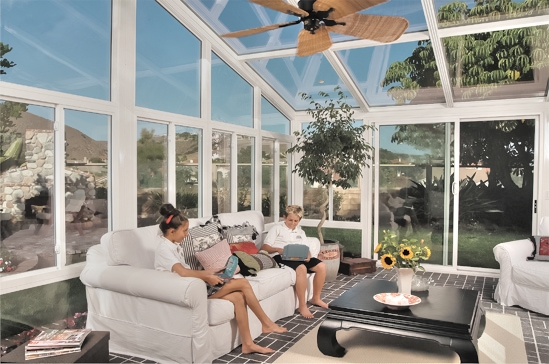
Two-story homes in master-planned neighborhoods often suit a cathedral roof, which adds height and an open feel. See our guide to cathedral sunrooms.
Solarium roofs
An all-glass roof delivers the most light and works best on shaded or north-facing sites. On sun-baked exposures, it requires a careful glass selection.
Enclosures, screen rooms and covers
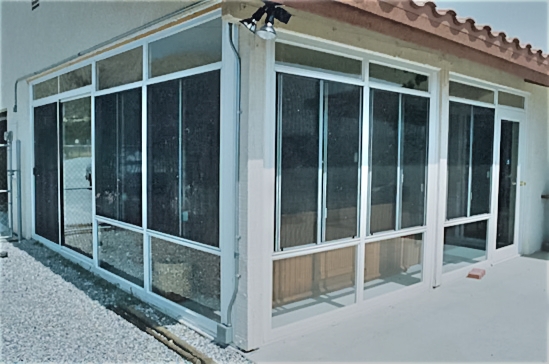
For a lighter budget, a patio cover gives shade, and screen rooms or enclosures add protection from bugs and wind. They are less suited to year-round use in this climate than an insulated room.
Does the direction your patio faces change the plan?
In a climate with this much sun, orientation can matter as much as the room type. Before the estimator arrives, it helps to notice where the sun hits your patio through the day.
West-facing patios
These take the full force of the late-afternoon sun, which is when Santa Clarita is hottest. An insulated roof is strongly recommended, and Low-E glass on the west wall helps control glare and heat. Solid lower wall panels on the sunniest side can also help.
South-facing patios
South exposures get steady sun all day. In summer, a solid insulated roof keeps the high sun off the room. In winter, the lower sun angle reaches in through the glass walls and warms the space, which is exactly what you want on a cold afternoon.
East-facing patios
Morning sun and afternoon shade make east-facing rooms some of the most comfortable in the valley. They are a good candidate for more glass, including partial glass roofs.
North-facing patios
These stay the coolest and get the least direct sun, which makes them the best place for a solarium roof or a light-filled glass sunroom. They can feel chilly in winter, so energy-efficient glass is still worth considering.
Wind exposure
On hillside lots, the direction the wind usually comes from can matter as much as the sun. Placing doors on the sheltered side makes the room easier to use on gusty days.
How much does a sunroom cost in Santa Clarita? What drives the price
Rooms are manufactured in California in hundreds of combinations, so there is no single price. These factors carry the most weight here.
- Room type: cover, screen room, enclosure, patio room or glass sunroom.
- Roof: insulated panels, studio, cathedral or solarium. In this climate, the roof decision matters more than almost anywhere else.
- Glass: Low-E and energy-efficient glass options for heat and cold.
- Size: larger rooms need more panels, doors and roof area.
- Slope and foundation: hillside lots, retaining walls and pool decks can add foundation work.
- Access: steep driveways and narrow side yards can affect installation logistics.
- Matching: colors and trim to fit the home and any association guidelines.
What Santa Clarita neighborhoods and lot types do we see?
Valencia
Valencia is known for its master-planned villages, paseos and association-managed communities. Homes are often stucco with tile roofs, and additions typically need to match. HOA approval may be part of the process.
Saugus
Saugus mixes older ranch homes with newer tracts, often on level lots with room for a generous patio. Insulated patio rooms are a natural fit.
Newhall
Around Old Town Newhall, homes range from older, character-filled houses to newer developments on the surrounding hills. Older homes may have aging slabs or covers to evaluate.
Canyon Country
Canyon Country is among the warmest parts of the city, with many hillside streets and canyon exposures. Insulated roofs and wind planning are especially important here.
Hillside and view lots
Many newer neighborhoods climb the hills and look out over the valley. A sunroom can frame the view, while the slope may call for raised foundations and careful access planning.
Homes with pools
Backyard pools are common. A room overlooking the pool gives shade in summer and a bright spot in winter.
Do you need a permit or HOA approval?
A room addition in Santa Clarita may require a building permit from the city. Many neighborhoods have associations, and HOA approval may be required, often covering colors, roof style and placement. Homes just outside the city limits may go through Los Angeles County instead. The estimator can help you understand what may apply.
How does the free in-home estimate work?
Estimates are free, no-obligation and available seven days a week from 9am to 9pm, which fits around long commutes. In roughly 15 to 40 minutes, the estimator measures the space, checks the slab and slope, notes sun and wind exposure and discusses how you will use the room. You get estimates, brochures and design layouts to compare and can ask every question. After you decide, preferred contractors complete installation in days, not weeks.
How do financing and current specials help in Santa Clarita?
Financing
Special financing programs are available so you can spread the cost over time.
Current specials
For a limited time, current specials include 20% off materials, 15% off rooms and free factory room upgrades.
Spend where the climate demands it
In Santa Clarita, putting the budget into the roof and glass usually pays off in comfort more than extra size or decorative features. Reusing a sound slab also helps.
Warranty
Every room carries a transferable lifetime factory warranty, which transfers to the next owner if the home is sold.
Which option fits your Santa Clarita home?
For a room you will use in July and January alike, choose an insulated patio room or a sunroom with an insulated roof and Low-E glass. For a two-story home with a view, consider a cathedral design. For shade on a budget, start with a cover and build from there.
Get your Santa Clarita sunroom price
Schedule your free in-home estimate, explore financing and current specials, or compare prices across the region on our Los Angeles County sunroom prices page.