
The phrase “four-season sunroom” gets used loosely, and that is where a lot of pricing confusion begins. One company’s four-season room is another’s three-season room with a space heater. At California Sunroom Price, we think it pays to know exactly what separates the two, because the features that make a room comfortable in every season are the same features that shape the price. This guide explains what a true four-season room includes, how it compares with a three-season design, and where your money goes.
What is a four-season sunroom?
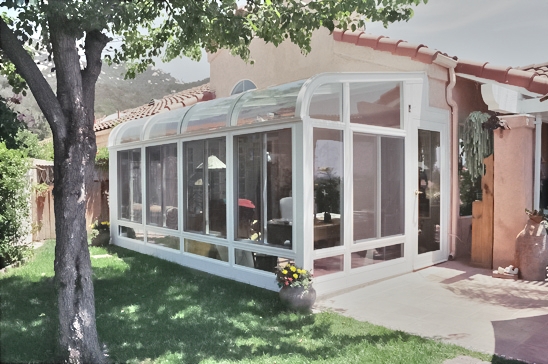
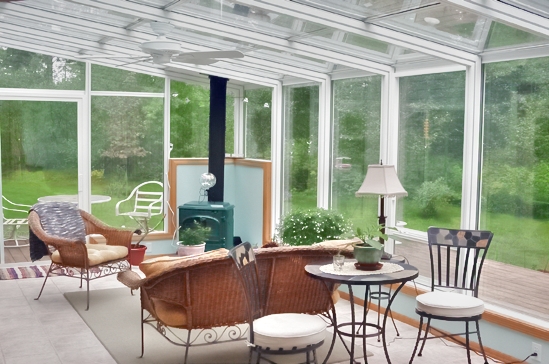
A four-season sunroom is a glass and aluminum room addition designed to be used comfortably all year. It brings in natural light like any sunroom, but it adds insulated roof panels, energy-efficient glass and heating and cooling so the temperature inside stays close to the rest of the house. Homeowners use four-season rooms as family rooms, home offices, dining rooms, reading rooms and places to grow plants through the winter.
What is a three-season room?
A three-season room shares the same bright, open feel but is typically built for use during the mild months. It may use single-pane or less insulating glass, a lighter roof and no dedicated heating or cooling. In many parts of Southern California a three-season room is usable for much of the year, which is why it remains a popular, lower-cost option.
Why the line between them matters for price
The jump from three-season to four-season is not one upgrade but several: roof, glass, climate control, electrical and sometimes foundation. Each one adds cost, and each one adds comfort. Knowing which ones you truly need is the key to getting the right room at the right price.
What drives the cost of a four-season sunroom?
Room size and shape
Square footage is the starting point. A larger room needs more glass, more roof and more framing, and it also needs more heating and cooling capacity. Unusual shapes, wraparound designs and rooms that turn a corner of the house add complexity.
Style and roof design
Style shapes both the look and the price. A studio sunroom with a single-slope roof is often the most straightforward. A cathedral sunroom with a gabled ceiling adds height and drama. A solarium with an all-glass roof delivers the most light but calls for careful glass choices to keep the room comfortable year-round. For a four-season room, many homeowners choose a fully insulated roof and use windows for the view.
Insulated roof panels
The roof is where much of a room’s heat gain comes from on a summer afternoon. Insulated roof panels slow that heat transfer and help the room hold warmth on cool winter nights. They are one of the defining features of a four-season room and one of its larger cost components.
Glass, including Low-E
Glass covers most of a sunroom’s walls, so its performance matters enormously. Energy-efficient glass options, including Low-E glass, reflect a portion of solar heat while letting in daylight. Upgrading from basic glass to higher-performance glass is one of the clearest differences between three-season and four-season pricing. Learn how glazing is evaluated on our energy efficiency and tests page.
Doors and windows
The number and type of windows and doors, from sliding and hinged doors to operable windows for cross-ventilation, all affect cost. More operable windows mean more hardware and screens. The door connecting the room to the house may also need attention if you are opening up an existing wall.
Heating and cooling
A four-season room needs a way to stay comfortable. Options include extending the home’s existing system if it has capacity, or adding a separate unit such as a ductless mini-split. Which approach fits depends on the size of the room, your current system and how you plan to use the space.
Electrical
Year-round rooms usually get more outlets, lighting, ceiling fans and circuits for heating and cooling. The distance to your panel and whether the panel has room for new circuits affect the price.
Foundation, slab or deck
A four-season room is a finished living space, so its base matters. An existing patio slab may be usable if it is in good condition and the right size. Otherwise, a new foundation or slab work may be needed. Rooms on raised decks or second stories involve different support considerations.
Permits, HOA and site access
Because four-season rooms typically include electrical and HVAC work, a permit may be required, and your HOA may have its own review. Access to the backyard, slope and existing landscaping can also affect installation time.
Four-season or three-season: a side-by-side look
- Roof: four-season rooms usually use insulated panels; three-season rooms may use a lighter roof.
- Glass: four-season rooms typically use energy-efficient or Low-E glass; three-season rooms may use more basic glazing.
- Climate control: four-season rooms include heating and cooling; three-season rooms usually do not.
- Electrical: four-season rooms often need more circuits; three-season rooms may need only lights and a few outlets.
- Use: four-season rooms work as true living space all year; three-season rooms shine in the mild months.
- Cost: four-season rooms cost more because of every item above.
Which options and upgrades matter most in a year-round room?
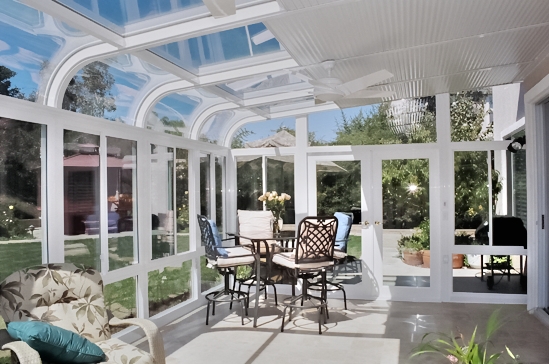
Once the core of a four-season room is decided, a set of finishing choices shapes how the room feels to live in and how the final price comes together. Rooms are manufactured in California in hundreds of combinations of style, glass, roof, doors, windows and color, so there is room to tailor each one. Browse the possibilities on our customization page.
Light control
Even with Low-E glass, a room full of windows benefits from a way to manage glare. Many homeowners plan for blinds or shades on the sunniest walls. If you work from the room, think about where screens and monitors will sit relative to the windows before the layout is finalized.
Ventilation
Operable windows placed on opposite walls let you cross-ventilate on mild days and rely less on cooling. Screens on those windows keep insects out. A ceiling fan helps move air in every season and is a relatively simple addition when the electrical is being planned.
Interior finish and connection to the house
A four-season room works best when it feels like part of the home rather than an afterthought. Matching exterior colors, choosing trim that complements your existing rooms, and planning a comfortable transition through the connecting door all help. Flooring is often chosen by the homeowner, so ask how the room will be delivered and what finishing is up to you.
Roof lighting and ceiling height
A higher ceiling, such as in a cathedral style, makes a room feel larger and brighter, while a studio roof keeps things simple. Recessed lighting set into insulated roof panels can light the room evenly at night. Each choice has a cost and comfort tradeoff that the estimator can lay out for you.
The goal is not to add every upgrade, but to choose the few that match how you will actually use the room in January and in August.
How does a four-season sunroom compare with a patio room or a patio enclosure?
Four-season sunroom versus patio room
A patio room has a fully insulated roof and insulated walls with windows, and it can often use an existing patio slab and match the home’s exterior. It feels more like a traditional room with windows than a glass room. Where a sunroom emphasizes light and views, a patio room emphasizes insulation and a finished look, and it can be a cost-effective way to add a den or office. Compare them on our patio room additions page.
Four-season sunroom versus patio enclosure
A patio enclosure adds walls under an existing cover or roof, turning an open patio into an enclosed space. Depending on the walls and glass chosen, it can be closer to a three-season room. It is often the more budget-friendly route when a sound cover is already in place. See our patio enclosure cost guide.
How do coast, inland and desert climates change the four-season decision?
Coastal homes
Mild temperatures mean many coastal homeowners can enjoy a three-season room for most of the year. A four-season room makes sense near the coast when the room will be a daily office or family room, or when the marine layer makes cool mornings the norm.
Inland valleys
Hot summers and cooler winter nights make four-season features more valuable inland. Insulated roof panels and Low-E glass matter most on south and west exposures, and dedicated cooling is often the deciding factor for a room people will use every day.
Desert communities
In the desert, heat is the priority. Without insulated roofing, high-performance glass and cooling, a glass room can become uncomfortable during much of the summer. Desert homeowners often treat four-season features as essential rather than optional.
How does the free in-home estimate work?
The best way to decide between three-season and four-season is to talk it through at your home. California Sunroom Price offers a free, no-obligation in-home estimate 7 days a week, from 9am to 9pm.
- Discuss how you will use the room. Office, family room, dining or plant room each point to different features.
- Evaluate the site. The estimator checks the slab or foundation, sun exposure, roofline, electrical panel and access.
- Compare configurations. You can see three-season and four-season versions of the same room priced side by side.
- Receive your materials. You get estimates, brochures and design layouts to review.
- Ask every question. Most visits take about 15 to 40 minutes.
What are the best ways to save on a four-season room?
Current specials
Current specials, available for a limited time, include 20% off materials, 15% off rooms and free factory room upgrades. A free factory upgrade can be especially useful on a four-season room, where roof and glass choices matter so much.
Special financing programs
Special financing programs are available so you can choose the features that make the room comfortable year-round. Review the details on our financing page.
Spend where it counts
- Prioritize the roof and glass on the sunniest exposures.
- Use an existing slab if it is in suitable condition.
- Choose a simpler roof style if light from above is not essential.
- Plan electrical and climate control at the same time as the room.
Which room fits your home and budget?
- You want a year-round office or family room: a four-season sunroom or a patio room.
- You live near the coast and want a bright room for mild days: a three-season sunroom may be enough.
- You live inland or in the desert and want summer comfort: four-season features are worth serious consideration.
- You already have a sound patio cover: a patio enclosure or patio-to-sunroom conversion may be the smart path.
All rooms are manufactured in California in hundreds of combinations, installed by preferred contractors in days rather than weeks, and backed by a transferable lifetime factory warranty. See examples in our photo tour.
Ready to price a four-season sunroom for your home?
Get a clear, side-by-side look at three-season and four-season options for your space. Schedule your free in-home estimate, ask about current specials and explore special financing. We serve Orange County, Riverside County, Los Angeles County, San Diego County and the surrounding areas.