When homeowners compare sunroom quotes, energy efficiency is often the line that explains why two rooms of the same size carry different prices. Glass, roof insulation, framing and the way a room is sealed all determine how comfortable it will be on a hot August afternoon or a cool January evening, and how much it will ask of your heating and cooling. This page explains what energy efficiency means in a sunroom or patio room, the kinds of performance testing that products undergo, and how these choices affect both the price you pay today and the value you get over time.
What makes a sunroom energy efficient?
A sunroom gains and loses heat in the same ways as the rest of your house, only more so, because it has more glass. Four elements do most of the work.
Glass
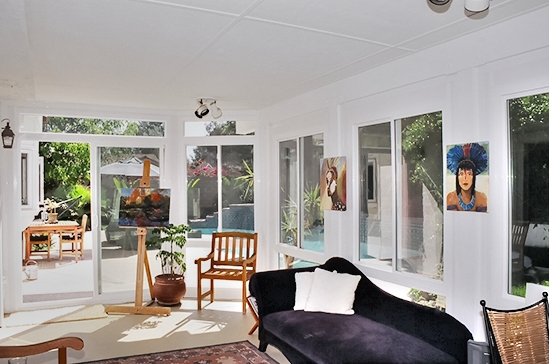
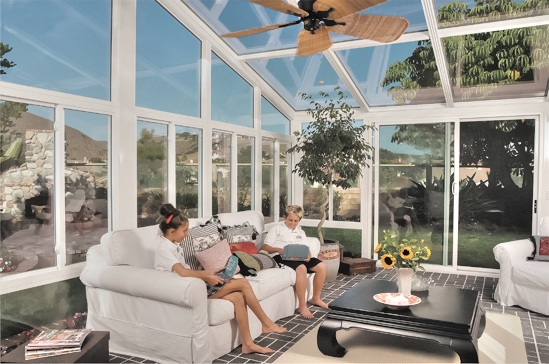
Glass is the largest surface in most sunrooms, so it has the biggest effect on comfort. Energy-efficient glass options, including Low-E glass, are designed to reflect a portion of the sun’s heat while letting daylight through. Insulated glass units, which use more than one pane with a sealed space between them, slow the transfer of heat in both directions.
Roof
A solid, insulated roof blocks far more heat than glass. That is why a patio room with a fully insulated roof stays cooler in inland summers than a room with a glass roof. Where a glass roof is part of the design, as in a solarium, the glass choice becomes even more important.
Framing
Aluminum framing is strong and durable, and the design of the frame affects how well the room resists heat transfer at the edges of every panel. Well-designed framing also keeps the glass properly seated and sealed over the years. Our strength page covers the structural side in more detail.
Seals, doors and windows
Even the best glass cannot help if air leaks around doors and windows. Tight-fitting, well-sealed doors and operable windows keep conditioned air in and dust and wind out, while still letting you open the room to the breeze when you want to.
What do energy and performance tests measure?
Window, door and sunroom products are commonly evaluated with standardized tests so homeowners can compare them on something more than appearance. When you look at product information, these are the terms you are most likely to see:
- U-factor. A measure of how quickly heat passes through a glass unit or window. Lower numbers mean less heat transfer.
- Solar heat gain coefficient (SHGC). The share of the sun’s heat that passes through the glass. Lower numbers mean less solar heat enters the room, which matters in Southern California.
- Visible transmittance. How much daylight comes through. The goal is usually to keep light high while keeping heat gain low.
- Air infiltration. How much air leaks through a closed window or door under test conditions.
- Water penetration and structural load. How well a product resists wind-driven rain and pressure from wind.
You do not need to memorize these terms, but it helps to know what to ask. During a free in-home estimate you can ask the estimator to walk you through the performance information for the glass and products you are considering.
How does energy efficiency affect the price of a sunroom?
Energy-efficient choices add to the upfront cost, and they are often the biggest single reason one quote is higher than another. The main cost drivers are:
Glass package
Standard glass is the most economical. Low-E and other energy-efficient glass options cost more because of the coatings and construction involved.
Roof type
An insulated solid roof, a partly glass roof and an all-glass roof each price differently, and each performs differently in the sun.
Number and type of openings
Every operable window and door adds hardware, seals and cost, but also adds ventilation, which is one of the most effective ways to keep a sunroom comfortable.
Room orientation
Orientation does not change the price directly, but it changes what you should buy. A west-facing room in Riverside County needs more help from its glass than a north-facing room near the coast.
Is it worth paying more for energy efficiency?
For most Southern California homes, investing in the right glass and insulation is the difference between a room you use every day and a room you avoid for part of the year. Consider:
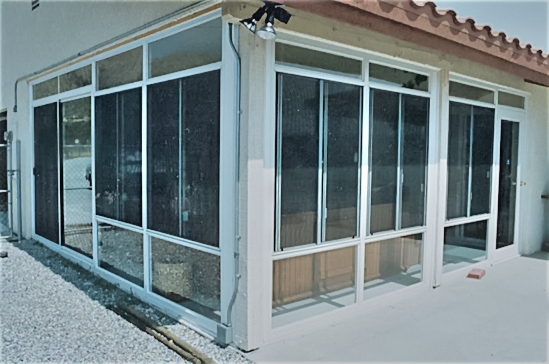
- Comfort. Efficient glass and an insulated roof reduce hot spots and glare, so the room is pleasant for more hours of the day.
- Operating cost. A room that resists heat gain places less demand on cooling, which can help with utility bills.
- Furnishings. Glass that limits solar heat can also help reduce fading of floors, fabrics and furniture.
- Resale value. A comfortable, light-filled room that buyers can imagine using year round is a stronger selling point than a room that feels like a greenhouse.
Which options fit your climate?
Southern California covers several climates. Near the coast in Orange, Los Angeles and San Diego counties, the challenge is often cool, damp mornings and afternoon sun on west-facing rooms; Low-E glass and good seals make a big difference. In inland valleys and the desert areas of Riverside County, summer heat is the main concern, so an insulated roof and energy-efficient glass on sun-exposed walls are the priorities. Many homeowners combine a solid insulated roof with generous glass walls to get the best of both.
How can you get efficient glass and stay on budget?
You do not have to upgrade every panel to the same level. A common strategy is to invest in the best glass on the south and west walls and choose standard options on shaded sides. Pairing a solid insulated roof with glass walls is another way to balance light and cost. Rooms are manufactured in California in hundreds of combinations, so there is room to tailor the package.
Special financing programs can help you choose the options you want without stretching the budget; see our financing page. Current specials include free factory room upgrades for a limited time.
How do you compare energy options for your home?
Book a free, no-obligation in-home estimate. Appointments are available seven days a week from 9am to 9pm and typically take 15 to 40 minutes. The estimator will look at your home’s orientation, shade and climate, explain the glass and roof options, and give you estimates, brochures and design layouts that show exactly what you would be getting. Installation by preferred contractors takes days, not weeks, and each room carries a transferable lifetime factory warranty. Explore sunroom additions or schedule your estimate.