
A patio cover is often the first outdoor upgrade Southern California homeowners price out, and for good reason: it turns a sun-baked slab into shade you can actually use from spring through fall. Yet the question “what does a patio cover cost?” has no single answer. An aluminum cover can be solid, lattice, insulated or topped with glass panels, and it can be attached to the house or stand on its own. Each choice changes the materials list, the labor and the look. This page from California Sunroom Price walks through every factor that moves the price of a patio cover so you know what you are paying for before anyone measures your yard.
What exactly is an aluminum patio cover?
A patio cover is a roof structure over an outdoor area, supported by posts and beams and either fastened to the home or built as a free-standing frame. Unlike a sunroom or a patio room, it has no walls, so it provides shade and shelter from light rain while keeping the space open to the breeze. Aluminum covers are popular here because they hold up to intense sun, coastal moisture and dry inland heat without the rot, warping or constant repainting that wood demands.
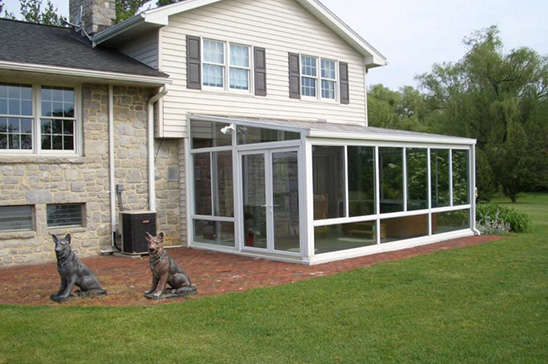
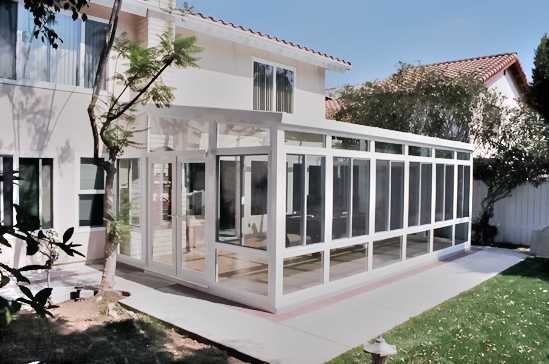
Solid patio covers
A solid cover uses continuous roof panels to block sun and rain completely. Some solid covers use insulated roof panels, which keep the underside cooler on hot afternoons and give you a better base for lighting and fans. Solid covers are the most common choice for homeowners who want full shade over a dining table or outdoor kitchen.
Lattice patio covers
A lattice cover uses open rafters and cross members to filter sunlight into a pattern of light and shadow. It feels airy, keeps plants happy and works well where full shade would darken nearby windows. Lattice spacing and member size can be adjusted to let in more or less light.
Glass-roof and combination covers
Some homeowners want shelter from rain but do not want to lose daylight in the rooms behind the patio. Glass or translucent roof panels solve that. Other designs combine a solid section near the house with a lattice section further out, balancing shade and light.
What affects the price of a patio cover?
Every patio cover estimate comes down to a handful of variables. Understanding them helps you decide where to spend and where to save.
Size and projection
The width along the house and the projection out into the yard set the amount of roof material, the number of beams and the number of posts. Longer projections may call for heavier beams or additional posts to handle the span, which adds to cost. A cover sized to your real furniture layout, rather than the full width of the yard, is often the smartest place to start. Height matters too: a taller cover can feel more open and may clear windows or doors more comfortably, while a lower one can block more low-angle afternoon sun. The estimator will talk through the tradeoffs for your specific exposure so the finished cover shades the right spot at the times you actually spend outside.
Roof style
Solid, insulated, lattice and glass-roof covers each use different components. Insulated panels cost more than standard solid panels but change how the space feels on a July afternoon. Glass roof panels involve different framing and glazing. Lattice uses more individual pieces but less continuous panel. Your estimate will price the style you actually want, and you can compare alternatives in the same visit.
Glass options, including Low-E
If you choose a glass-roof section, the type of glass matters. Low-E glass reflects a portion of the sun’s heat while still letting light through, which can make a big difference over a west-facing patio. Tinted or specialty glass options add further choices. Learn more about how glazing performs on our energy efficiency and tests page.
Attached versus free-standing
An attached cover ties into the fascia, wall or roof of the home and needs fewer posts. A free-standing cover needs posts on every side but can sit anywhere in the yard, such as over a spa or a fire pit. Attachment method depends on your roofline and eave height, and it changes both the parts and the labor involved.
Posts, beams and footings
Posts need a solid base. If your slab is in good shape, posts may anchor directly to it. If the posts land in soil or on a cracked slab, new footings may be needed. Decorative post wraps, column styles and beam end cuts add character and a modest amount of cost.
Electrical, lighting and fans
Recessed lights, fan-ready connections, outlets and outdoor heaters all require wiring. The distance from your electrical panel and the path the wiring takes are both part of the price. Planning electrical at the same time as the cover is usually simpler than adding it afterward.
Permits, HOA review and site access
A permit may be required depending on your jurisdiction and the size of the cover, and your HOA may have color or style guidelines to follow. Tight side yards, steep lots, second-story attachments or a pool between the driveway and the patio can add labor time. These are all things the estimator notes during the visit.
Which options and upgrades change the cost most?
Beyond the basic structure, a few upgrades account for most of the variation between two similar covers.
- Insulated roof panels for a cooler underside and a cleaner ceiling look.
- Glass or translucent sections to protect daylight in the rooms behind the patio.
- Integrated lighting and ceiling fans for evening use and summer comfort.
- Gutters and downspouts to control runoff from a solid roof.
- Decorative posts, beam ends and trim to echo the style of your home.
- Color matching to your fascia, trim or stucco.
Covers are manufactured in California in hundreds of combinations of style, roof type and color, so you can fine-tune the design rather than settle for a one-size package. Browse ideas on our customization page.
How does a patio cover compare with a pergola or a patio enclosure?
Patio covers sit in the middle of the outdoor-living spectrum, and it helps to see them next to their closest alternatives.
Patio cover versus pergola
A pergola is primarily a design feature with an open roof of beams and rafters. It gives partial shade and a strong architectural look but little protection from rain. A patio cover, especially a solid or insulated one, gives dependable shade and shelter. If you mainly want to define an area and add style, see our pergola cost guide. If you want to use the space in all kinds of weather, a cover is usually the better value.
Patio cover versus patio enclosure
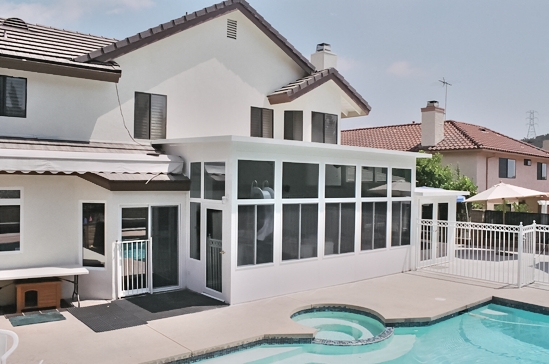
A patio enclosure adds glass, screen or insulated walls under a roof so the space becomes a room. It naturally costs more than a cover alone because of the walls, doors and windows involved, but it adds much more usable time through the year. Many homeowners install a cover now and enclose it later. Our patio enclosure cost page explains that path in detail.
How do coast, inland and desert conditions affect your patio cover?
Southern California covers several very different climates, and the right cover for a beach bungalow is not always the right cover for a desert ranch house.
Coastal neighborhoods
Near the coast, marine layer and salt air are the main concerns. Aluminum resists rot and does not need repainting like wood, which is a big reason it is favored in coastal Orange, Los Angeles and San Diego counties. Many coastal homeowners choose lattice or partial glass to keep light on gray mornings.
Inland valleys
Inland communities see hotter summers and stronger afternoon sun. Solid or insulated covers are popular here because they keep the patio usable after lunch, and ceiling fans are a common add-on. West and south exposures benefit most from full shade.
Desert communities
In the desert areas of Riverside County and beyond, heat and wind drive the decision. Insulated roof panels can make the underside noticeably more comfortable, and wind exposure may influence post and beam sizing. Low-E glass is worth considering for any glass sections. The strength page covers how our structures handle demanding conditions.
How does the free in-home estimate work?
The most accurate patio cover price comes from someone standing on your patio. That is why California Sunroom Price offers a free, no-obligation in-home estimate, available 7 days a week from 9am to 9pm.
- Walk the space. The estimator looks at your slab, roofline, eave height, sun exposure and access.
- Talk about how you use it. Dining, lounging, cooking or shading a spa each point toward different designs.
- Compare styles. You can price a solid, lattice or glass-roof option in the same visit.
- Review materials. You receive estimates, brochures and design layouts to look over.
- Ask every question. Most visits take roughly 15 to 40 minutes, and nothing is decided until you are ready.
What are the best ways to save on a patio cover?
Take advantage of current specials
Current specials, available for a limited time, include 20% off materials, 15% off rooms and free factory room upgrades. Ask during your estimate which offer fits a patio cover project and whether bundling the cover with a future enclosure makes sense.
Use special financing programs
Special financing programs are available to help spread the cost of your project over time. You can review the options on our financing page before or after your estimate.
Size to your actual use
A cover that shades your table, grill and a walkway is often all you need. Mapping out your furniture before the visit helps avoid paying for shade you will not use.
Plan electrical and future phases now
Wiring for lights and fans is typically simpler when the cover is going up. If you might enclose the space later, planning post locations and footings now can reduce work down the road.
Which patio cover fits your home and budget?
- You want full shade and rain protection: a solid or insulated cover.
- You want filtered light for plants and a softer look: a lattice cover.
- You want to protect daylight in the rooms behind the patio: a glass-roof or combination cover.
- You want a separate shaded zone out in the yard: a free-standing cover.
- You eventually want a room: a solid or insulated cover planned for a future enclosure, or go straight to a patio room addition.
Installation is completed by preferred contractors and takes days, not weeks, and every structure comes with a transferable lifetime factory warranty. You can see finished projects in our photo tour.
Ready to find out what your patio cover will cost?
The only price that matters is the one for your patio, your roofline and your plans. Schedule your free in-home estimate any day of the week, ask about current specials and review special financing programs. We serve homeowners across Orange County, Riverside County, Los Angeles County and San Diego County, plus the surrounding areas.