
Julian is the one place in San Diego County where people plan a sunroom around the first snowfall. At roughly 4,000 feet in the Cuyamaca Mountains, this old gold-mining town sees crisp fall days, apple harvests, frosty mornings and, some winters, a blanket of snow on the pines along Main Street. That mountain climate turns the usual sunroom conversation upside down. California Sunroom Price serves Julian and the surrounding areas, including Wynola, Santa Ysabel, Pine Hills and Ramona, and this guide explains what drives the price of a sunroom, patio room, enclosure or cover in mountain country.
Is a sunroom practical in Julian’s mountain climate?
Yes, and in many ways it makes more sense here than anywhere else in the county. A well-planned room gives you a bright, sheltered place to enjoy the forest on a cold, sunny winter day, when the deck is too chilly to sit on. The key is choosing the right kind of room for the season you most want to use it in.
Winter is the design season
Down on the coast, rooms are planned around summer sun. In Julian, they are planned around cold nights, freezing mornings and occasional snow. Insulation, glass and roof choices carry more weight here than almost anywhere else in Southern California.
Summer is mild, but the sun is strong
Mountain summers are pleasant, yet the sun at elevation is intense. Glass selection still matters on south- and west-facing walls.
Three-season or year-round?
A screen room or simple enclosure is a spring-through-fall space. An insulated patio room, or a glass sunroom with an insulated roof and energy-efficient glass, is the path to a room you will use in January.
How much does a sunroom cost in Julian? What drives the price
Every room is manufactured in California in hundreds of combinations of styles, glass, roofs, doors, windows and colors. In Julian, these are the variables that matter most.
Roof type and insulation
A fully insulated roof is the single most important choice for a year-round mountain room. It holds warmth on cold nights and keeps the room comfortable on bright summer days. A glass roof is beautiful under the pines but is best considered with a clear sense of when you will use the room. Ask about how the roof and frame are built for your site; our strength page explains the construction.
Glass package
Low-E and energy-efficient glass help hold heat in winter and manage glare in summer. Compare the options on our energy efficiency and tests page.
Room type
Pergolas and patio covers are the lightest projects, followed by screen rooms, enclosures, insulated patio rooms, glass sunrooms and solariums.
Site and foundation
Many Julian homes sit on sloping, rocky or wooded lots, and some have raised wood decks rather than a patio slab. A sound, level slab is the most economical base. New slabs or grade changes add scope.
Access
Winding mountain roads, gravel drives and tree-lined lots are part of the charm. The estimator notes access during the visit so delivery is planned from the start, and scheduling may take weather into account in winter.
Size and finishes
Larger rooms, extra doors and operable windows, frame colors and trim matching round out the price. Earthy frame colors often suit cabin and farmhouse styles.
How Julian’s climate shapes what you should buy
Cold nights and frosty mornings
Temperatures drop quickly after sundown for much of the year. An insulated room holds daytime warmth far better than an open deck or a screen room.
Snow in some winters
Julian does not get snow every year, but when storms come through, roofs and decks can see real accumulation. That is a strong reason to favor an insulated roof and to talk through roof design for your site during the estimate.
Pine needles, oak leaves and shade
Wooded lots shed needles, leaves and acorns onto roofs. Shade keeps rooms cool in summer but also means less winter sun, so room placement is worth thinking through.
Bright, dry summer days
Summer afternoons are warm and sunny, with thunderstorms building over the mountains on some days. A room with operable windows lets the breeze through.
Julian areas and lot types
Homes near historic Main Street
Older homes close to town often have Victorian or farmhouse character and smaller lots. Rooms are usually modest in size and designed to suit the home’s style.
Kentwood-in-the-Pines and wooded neighborhoods
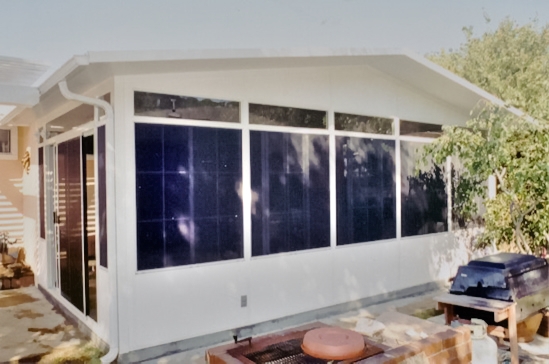
Homes tucked under tall pines and oaks see plenty of shade and needle fall. Insulated rooms with well-placed glass toward any open sky are a common choice.
Pine Hills and the forested ridges
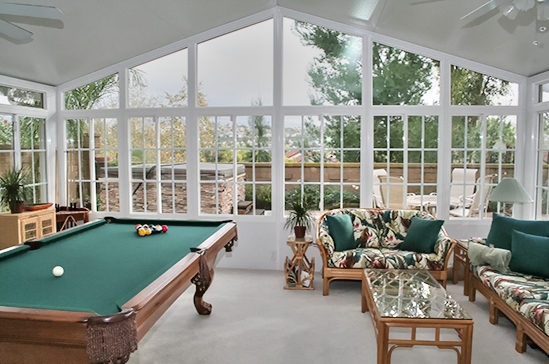
Ridge homes often have long forest views and more exposure to wind and weather. Cathedral-style glass toward the view, paired with an insulated roof, balances views and comfort.
Orchard and ranch parcels
Properties with apple orchards or open pasture, including those toward Wynola and the Volcan Mountain side of town, leave room for a larger room or a freestanding cover.
Cabins and weekend homes
Many second homes sit on steep lots with raised decks. Placement on a level area near the house usually keeps site work manageable.
Sunroom, patio room or enclosure: which fits your Julian home and budget?
Insulated patio rooms: the four-season choice
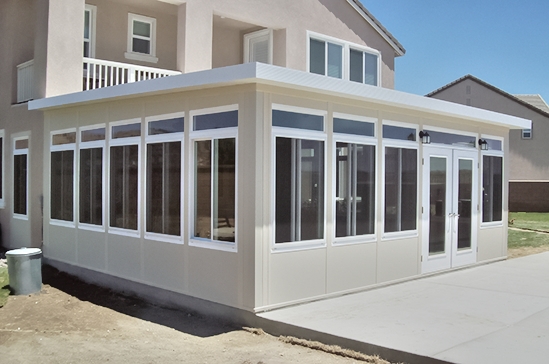
A patio room with a fully insulated roof is usually the best fit for year-round mountain living. It can use an existing slab, can match the home’s exterior and works as a den, reading room or extra room.
Glass sunrooms for forest light
Studio and cathedral sunrooms bring the forest inside. With energy-efficient glass and an insulated roof, they stay comfortable through much of the winter.
Screen rooms and enclosures for summer and fall
If your main goal is enjoying mild evenings without insects, a screen room or enclosure over an existing cover is a lighter project.
Covers and pergolas
A cover shelters a deck or patio from sun and rain, and can be enclosed later.
How do Julian homeowners use a mountain room?
Some use it as a warm reading room with a view of the snow-dusted pines. Others turn it into a place to dry off after a winter hike, a sunny spot for potted plants that cannot survive the frost outside, or a comfortable gathering room for the family on a holiday weekend in the mountains.
Do you need a permit or HOA approval?
Julian is an unincorporated community, so permits for a room addition may go through San Diego County rather than a city. A few neighborhoods may have associations, and HOA approval may be required there. We talk through what may apply during your visit.
How the free in-home estimate works
Estimates are free, no-obligation and available seven days a week from 9am to 9pm, which is helpful for weekend homeowners. The visit usually takes roughly 15 to 40 minutes. The estimator checks the slab or deck, grade, trees, access and sun, and talks through which season you most want to use the room. You get estimates, brochures and design layouts and can ask every question. When you move ahead, preferred contractors install the room in days, not weeks.
Ways to save: financing and current specials
- Special financing: programs are available so you can choose the insulated roof and glass a mountain room needs. See our financing page.
- Current specials: for a limited time, savings on materials and rooms and free factory room upgrades.
- Plan for the season you care about: a screen room costs less than a four-season room, but only if spring through fall is really when you will use it.
- Warranty: rooms carry a transferable lifetime factory warranty that transfers to the next owner if the home is sold.
Which option fits your Julian home?
If you want a warm, bright room to enjoy on a snowy January afternoon, choose an insulated patio room or a glass sunroom with an insulated roof and energy-efficient glass. If summer and fall evenings are your focus, a screen room or enclosure will do the job with less scope. And if you mainly want to keep rain and needles off a deck, start with a cover.
Get an exact price for your Julian room
Book your free in-home estimate, look into special financing, and compare options across the region on our San Diego County sunroom prices page.