
Fountain Valley was built largely as a planned suburb of single-story and two-story tract homes on flat, regular lots, and that layout makes it one of the easier places in Orange County to add shade or living space behind the house. If you are pricing a patio cover, sunroom, patio room or enclosure here, this guide walks through what actually moves the number up or down. We serve Fountain Valley and the surrounding areas, including Huntington Beach, Costa Mesa, Westminster and Santa Ana.
We do not publish flat prices, and there is a good reason for that: two Fountain Valley homes on the same street can end up with very different quotes because of roof pitch, the condition of the existing slab, the direction the yard faces and the options the owner picks. What we can do is explain the variables so the estimate you receive makes sense.
How much does a patio cover or sunroom cost in Fountain Valley? What drives the price
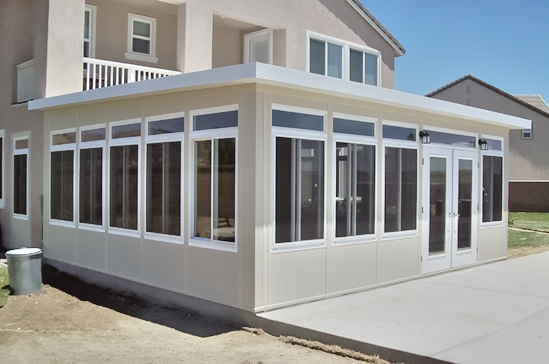
Every project starts with the same basic question: how much structure are you adding, and how finished does it need to be? A simple open patio cover sits at one end of the spectrum, and a fully glazed, insulated room sits at the other. Between them are dozens of combinations, because our rooms are manufactured in California in hundreds of configurations of style, glass, roof, doors, windows and color.
Size and footprint
Square footage is the most obvious driver. A cover that shades a small dining area behind the kitchen is a different project from one that runs the full width of the house. With enclosed rooms, wall height and the number of glass panels matter as much as floor area.
Roof type
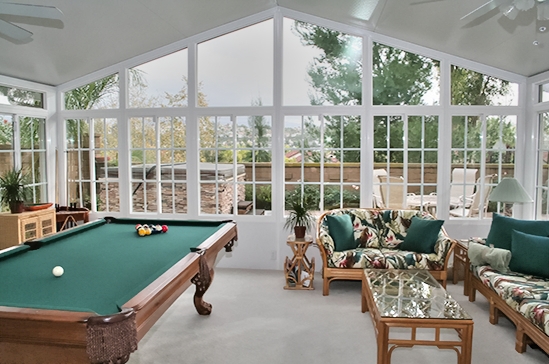
An open lattice or solid aluminum cover uses less material than an insulated roof panel system. Patio rooms use fully insulated roofs, which add cost but make the space comfortable in more months of the year. Sunrooms add another layer of choice, from a single-slope studio roof to a peaked cathedral profile or an all-glass solarium roof.
Glass and windows
Clear single-pane glass, dual-pane units and Low-E coated glass all price differently. Energy-efficient glass costs more up front but controls heat gain on the afternoon side of the house. The count and style of windows and doors, sliding versus hinged, also shift the total.
Foundation and site work
Many Fountain Valley homes already have a concrete patio slab poured when the tract was built. If that slab is level and sound, a patio room can often use it, which keeps site work down. A cracked, sloped or undersized slab may need repair or a new footing, and that is priced into the estimate.
Attachment to the house
How the new roof ties into your existing eave or fascia affects labor. Low-pitched ranch roofs, which are common here, sometimes require a freestanding beam or a different attachment method than a steeper two-story roofline.
Patio cover, sunroom, patio room or enclosure: which fits your Fountain Valley home and budget?
Choosing the right product category is the single biggest decision you will make on price. Here is how the options compare in practical terms.
Patio covers and pergolas
If your goal is shade over a barbecue or dining set and you still want an open-air yard, a patio cover or pergola is the lightest investment. Solid covers block sun and light rain; lattice and pergola styles filter light and feel more open.
Patio enclosures and screen rooms
An enclosure adds walls, usually with screens or windows, around an existing covered area. It keeps out insects and wind while preserving a porch-like feel. This is a common middle step for owners who already have a cover they like.
Patio rooms
A patio room is a true room addition with an insulated roof that can be finished to match your stucco or siding. Owners use them as dens, home offices, playrooms or extra bedrooms. See our patio room additions page for how they are built.
Sunrooms
Sunrooms are glass and aluminum additions designed to bring as much natural light inside as possible. Styles include the studio, the cathedral, the conservatory look and the solarium with its glass roof. Our sunroom additions overview covers each style in more detail.
How Fountain Valley’s climate affects what you should buy
Fountain Valley sits just a few miles inland from the coast, so it gets the marine layer on many mornings and plenty of sun by afternoon. Summers are warm rather than scorching, and winters are mild but can feel damp in the evening.
Morning fog and afternoon sun
Because mornings can be cool and gray, many owners here want a room that captures warmth when the sun breaks through. A sunroom with Low-E glass balances that: it admits light while limiting the heat that builds up on a west-facing wall later in the day.
Evening comfort
An open cover is lovely at midday, but on a cool, breezy evening an enclosure or patio room is more usable. If you want year-round use, budget toward walls and an insulated roof rather than a cover alone.
Salt air and maintenance
Homes on the western side of town are closer to the ocean breeze. Aluminum framing with a factory finish holds up well in that setting and keeps long-term upkeep modest. If glass performance is a priority, ask about the energy-efficient glass packages during your visit.
Fountain Valley neighborhoods and lot types
Fountain Valley does not have dramatic hills or oddly shaped canyon lots, but there are still meaningful differences from one part of the city to another.
Homes around Mile Square Regional Park
Streets surrounding Mile Square Park tend to have established tract homes with mature trees. Large trees can shade a patio, which may let you choose a lighter glass package, but overhanging branches can also affect where a roof is placed.
Tract homes along Brookhurst Street and Magnolia Street
Much of the city’s housing lines these north-south corridors. Rear yards are usually rectangular and fairly deep, which suits a full-width patio cover or a patio room that extends straight back from the family room.
Neighborhoods near the Santa Ana River
Homes on the eastern edge near the river trail often have yards that open toward the afternoon sun. That orientation favors energy-efficient glass and, for some owners, a solid insulated roof instead of a glass one.
Two-story homes near Talbert Avenue and Warner Avenue
Two-story plans change how a cover attaches, because the addition may tie in beneath a second-floor window or balcony. That can add a bit of design time but also gives you more roofline to work with.
Single-story ranch homes on the west side
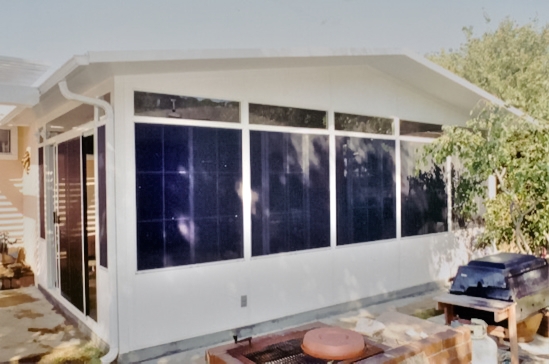
Low-slope roofs are common on single-story homes toward the Huntington Beach border. A patio room with a low-profile studio roof usually blends best with these houses.
Do you need a permit or HOA approval?
Many room additions and some patio covers in Fountain Valley may need a building permit, depending on size, attachment and the work involved. The rules can differ between an open cover and an enclosed, insulated room. Some neighborhoods may also have an association that wants to review exterior changes before work begins.
What to check
- Whether your project may require a permit from the city.
- Whether your neighborhood may have an association with design guidelines on color or rooflines.
- Where your property line and any easements sit, since setbacks may limit how far back the addition can extend.
Your estimator can talk through these questions during the visit so you can plan ahead.
How the free in-home estimate works
An accurate price comes from looking at your actual house, not from an online calculator. That is why our estimates are free, carry no obligation and happen in your home.
Scheduling
Appointments are available seven days a week, from 9am to 9pm, so you can pick a time when everyone who has a say in the decision is home.
During the visit
The visit usually takes about 15 to 40 minutes. You will receive estimates, brochures and design layouts, and you can ask every question on your list. The estimator will look at your slab, your roofline and the direction the yard faces.
After the visit
You will have a written number for the options you care about, so you can compare a patio cover against a patio room side by side. Our photo tour is a good place to collect ideas before the appointment.
Ways to save: financing and current specials
Price is not only about the total; it is also about how you pay for it and when you buy.
Special financing
Special financing programs are available for homeowners, which can make a larger room more manageable than paying all at once. Details are on our financing page.
Current specials
For a limited time, current specials include 20% off materials, 15% off rooms and free factory room upgrades. If you have been comparing options, this is a practical window to get a quote.
Choose features that matter
You can control cost by focusing spending where it counts. Upgrade the glass on the sunny wall, keep the roof simple, and reuse a sound slab if you have one.
Long-term value
Every room carries a transferable lifetime factory warranty, which can matter to a future buyer. Installation is handled by preferred contractors and takes days, not weeks, so disruption at home stays short.
Which option fits your Fountain Valley home?
If you mostly want shade for weekend barbecues, a patio cover or pergola is the sensible choice. If insects and evening breezes chase you indoors, an enclosure or screen room is the next step. If you need a real room for work, guests or a family den, a patio room with an insulated roof makes the most sense. And if light is the whole point, a sunroom is the answer.
- Shade only: patio cover or pergola.
- Bug-free outdoor feel: patio enclosure or screen room.
- Extra living space: patio room.
- Maximum natural light: sunroom, from studio to solarium.
Get your Fountain Valley price
The fastest way to know what your project will cost is a free, no-obligation visit. Request your in-home estimate, look over financing options and current specials, or browse more pricing information for the region on our Orange County sunroom hub.